Sandra Meranda

  • Home
  • About Sandra
    • Information for Buyers and Sellers
  • Blog
  • Contact Sandra

March 20, 2017 by changescapeweb

4 Things to Look for in a Home for Your Senior Years

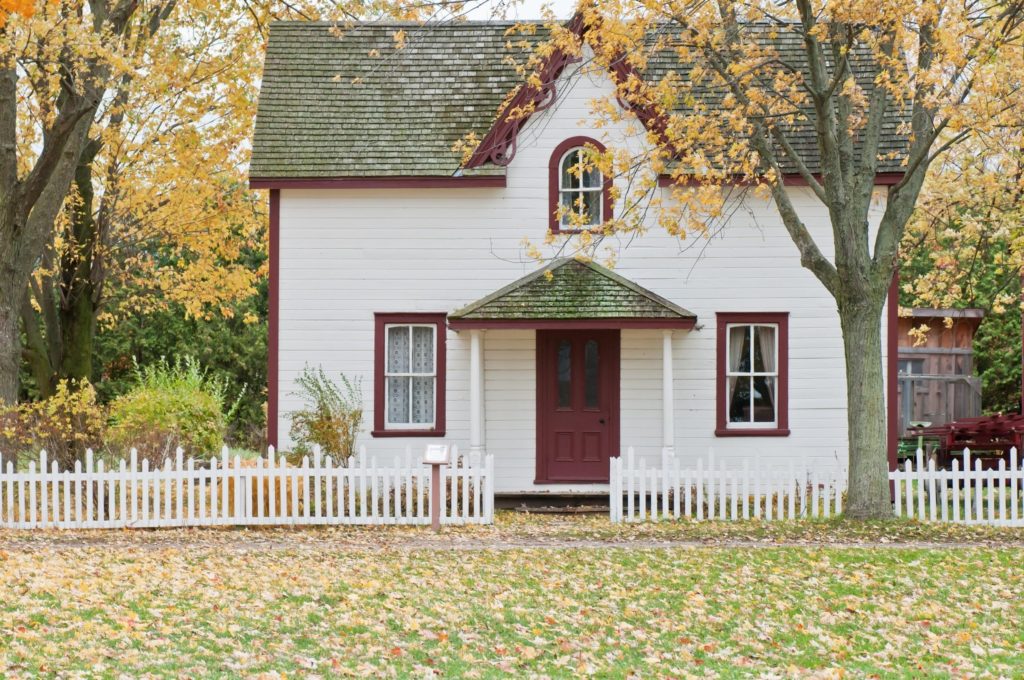
house


Your working days are over, you’ve got a comfortable nest egg, and you’re ready to sell your family home and move into a cozier abode so you can relax and enjoy your retirement. But do you know what you want out of your post-retirement home? Most seniors want to settle into a home they can stay in for the long haul, but few understand how to find a home that will remain livable as their needs evolve. Here are a few things to consider when you’re shopping for your forever home.

Single-Floor Living

If you’re shopping for a new home at 55, you’re probably not concerned about stairs or wide hallways just yet. However, it’s important to consider how your accessibility needs may change as you age. To ensure that you can maintain your independence throughout your life, look for a house or condo that integrates accessible living with good design.

One of the most important features is single-floor living. While you don’t need to restrict yourself to single-story homes, you should consider the fact that a temporary disability could leave you restricted to the main floor for an extended period. You should also look for features like stepless entrances, curbless showers, and zero-clearance thresholds. Regardless of whether you ever use a wheelchair or walker, features like these can reduce the risk of an accidental fall.

Low-Maintenance Homes

Even if you’re the rare person who enjoys yard work, there’s a good chance you won’t find it so pleasurable when you’re 80. For stress-free retirement living, skip the big backyard and instead look for housing with maintenance-free green space. This may mean a home that borders a park, a condo complex with landscaped grounds, or a rental where your landlord handles the lawn.

It’s a good idea to pare down your indoor square footage, too. Keeping up with housework becomes increasingly challenging as you age, and you don’t want to spend your retirement worrying about chores.

Access to Amenities

If you’ve lived in the same town for years, you probably have strong social and community ties that you’d like to maintain during your later life. And not without good reason — after all, social support is one of the biggest indicators of good health as you age. However, at some point you won’t be able to get around as easily, and you may even have to stop driving. When that happens, will you still be able to get to your church, library, or other community hub?

When you’re searching for a new home, consider skipping the suburbs and instead look for a home centrally located near shopping, restaurants, and public transportation. But don’t sacrifice security for convenience. Instead, find a neighborhood that balances safety with walkability so you can stay socially and physically active throughout retirement.

Retirement-Friendly Taxes

For seniors seeking a new destination to retire to, choosing a locale with retiree-friendly tax policies is a great way to free up more cash for leisure pursuits. Some states don’t tax certain sources of retirement income while others, like Florida, Washington, and South Dakota, skip the personal income taxes entirely. However, there are other taxes to consider. High property taxes can quickly eliminate what you save on income taxes, so be sure to factor in any prospective destination’s overall tax burden and cost of living.

There’s a lot to think about when you’re looking for a home that you can live in comfortably for the next 20 or 30 years, but there are realtors that specialize in helping seniors find a home that meets all their needs, both current and future. For help navigating the real estate market and finding the perfect home for your senior years, consult with a realtor who is trained as a Senior Real Estate Specialist or Certified Senior Housing Professional.

Article by Jim Vogel
jim@elderaction.org

Image via Unsplash by Scott Webb


P.S. Real estate is booming this Spring! Homes are selling fast & for the highest prices in years. It is never too early to get your home ready for the Spring/Summer market. It is a great time for buyers to call me to discuss the market also. Don’t miss
out on your dream home & interest rates are still low. Call me for details today!

Filed Under: Buying a Home, Guest Blogger

December 14, 2016 by changescapeweb

Will 2017 be a buyer’s market or a seller’s market?

anatoli-styf_272045705-1024x454


Here’s what four economists had to say about whether 2017 is leaning toward buyers or sellers.

The consensus is?

Most economists we talked to said that overall, they thought 2017 was going to continue to be a strong market for sellers — for now.

“While I expect inventory levels to rise in 2017, it will likely remain a seller’s market,” said Matthew Gardner, chief economist at Windermere. “New construction will pick up steam in 2017, but not to levels that will provide sufficient support to a stretched housing market. Sellers will likely find that it will take a little longer to sell, but demand will still outstrip supply on the back of a job market that continues to tighten.”

Svenja Gudell, chief economist at Zillow, opined that “2017 is probably going to skew more toward the seller’s market — most markets will skew more toward seller’s markets, and even in the Midwest there are probably more seller’s markets than buyer’s markets compared to their own history.”

Geography does play a role, however, said Jonathan Smoke, chief economist at realtor.com.

“Ultimately, I do think it depends on where you are in the country — and not even at a market level,” Smoke said. “We’re seeing some clear patterns emerge within markets — one might be slowing down and cooling off where another part is really heating up. Real estate is so local that I would argue that a neighborhood view is really where you can see the differences and disparities and changes that are occurring around the country.”

Smoke noted that first-time buyers have been most successful in the Midwest this year, whereas markets in the West have seen the most significant price appreciation, making it difficult for first-time buyers to find success.

“We tend to have markets that are either above average in price expectation or sales expectation, and there aren’t many markets that have above-average expectations in both — supply constraint is driving the price movement in the strongest price markets, seller’s markets, but the buyer’s markets where buyers are getting a really affordable home, as a result, those markets are seeing a greater growth in sales,” Smoke explained.

“Either one is good for real estate,” he concluded.

Will we see a shift?

Gudell said that Zillow had just asked a panel of experts — more than 100 economists — “what they thought was going to happen to the tradeoff between buyers versus sellers.”

She said that among the economists surveyed, the most popular belief was that in 2018 or 2019, the bulk of markets will begin to shift from seller’s markets to buyer’s markets.

“In some markets, it’ll start to turn already in 2017, where demand isn’t quite so high and you get a little more inventory in and you have buyers better able to negotiate,” Gudell added.

What does the future buyer look like?

Mark Fleming, chief economist at First American, said that, “assuming an environment with modestly and predictably rising mortgage rates, it becomes a first-time homebuyer purchase-oriented marketplace.

“The question as a real estate agent is, how do you find and market to that first-time homebuyer?” asked Fleming. “Because that first-time homebuyer is going to be a young, technologically savvy millennial — and even more importantly, ethnically diverse. The demand for first-time housing is going to come from a different kind of individual than we’ve traditionally seen: Young, diverse, technologically savvy and much more likely to be college-educated.”

“The homeownership rate will grow, and they’ll be less white and a little younger,” said Gudell.

“Unfortunately, I think all of us will be spending more time in the car as more people have to look for more housing outside the city center as homes become much more expensive in the urban area,” she added. “During the recovery, it’s really picked up and the urban centers have appreciated much faster than the outerlying areas.”

“The potential is there for the market to have the most first-time buyers — certainly on an absolute volume basis, but also on a shared transactions perspective,” said Smoke.

“For the industry, this is the biggest shift we need to be able to contend with because it likely means elongated length of time that people are spending in that journey, especially the first-time buyer, but it potentially also means higher cancellation rates and lower conversion rates. You’re going to have more challenges with people contending with needing to qualify for and buy a home in the environment we’re in now than in the environment we were in the last two years.

“Highly qualified pent-up demand has been driving the market — now, it’s more organic activity at a time when interest rates are on the move-up,” he added. “The potential is there for an even bigger year than we’re forecasting, but it comes with challenges and that’s why we’re expecting only moderate growth instead of huge growth.”

“The thing about housing is that everybody needs it and you can’t outsource it,” said Fleming.

Article written by AMBER TAUFEN

https://www.inman.com/newsletter/brief-hedlines-tues-dec-13-2016/


P.S. Real estate is still booming this FALL! Homes are selling fast & for the highest prices in years. It is never too early to get your home ready for the Fall market or for next year.  It is a great time for buyers to call me to discuss the market also.
Don’t miss out on your dream home & interest rates below 3.5%.  Call me for details today!

Filed Under: Buying a Home, Home Sales, Housing Market

October 10, 2016 by changescapeweb

6 things homebuyers should never say during a tour

While it may be tempting for buyers to say what’s on their mind while looking at houses, agents should encourage them to pause for a moment. There are some things home buyers should never say on the fly.

Listing agents, sellers, even neighbors may be listening; and they all have motives to keep tabs on the situation.

Casual comments could be used against the home buyer

Saying things like:

  • I love it
  • The decor is awful
  • This house is way over priced

All these things go straight back to the seller.

What are the neighbors like?

That’s another question that should never be asked.

The listing agent has no idea; and do you think the seller is going to tell you that the neighbor’s son has a band that starts rehearsing at 2:00 in the morning?

The buyers have to asses the neighbors on their own.


This information is from an article on inman.com
You can read the full article here.

Filed Under: Uncategorized

March 22, 2016 by changescapeweb

Millennial buyers moving to suburbs: NAR 2016 trends survey

All year when you see or hear a news outlet citing a homebuyer or homeseller statistic, odds are that it came from the annual National Association of Realtors’ “Home Buyer And Seller Generational Trends” report. The 2016 report was released this morning and shows that more millennials(defined as buyers and sellers age 35 and younger) are purchasing homesoutside of urban areas, and that despite the common refrain of millennial debt, these buyers don’t have the biggest student debt balances. Once again — for the third year in a row — millennials comprised the largest number of recent homebuyers. Here’s the approximate breakdown of respondents (due to rounding, numbers add up to more than 100 percent):

  • Millennials: 35 percent
  • Generation X: 26 percent
  • Baby boomers: 31 percent
  • Silent generation: 9 percent

Millennials moving home to the suburbs

Younger buyers seem to be shifting from seeking homes in urban city centers to the more sedate suburbs. The share of millennials buying in an urban area decreased to 17 percent from 21 percent in the 2015 NAR survey. Also, fewer millennials purchased multifamily homes than last year (10 percent instead of 15 percent).

Other millennial trends

Millennials were certainly making compromises in the homebuying process, according to Jessica Lautz, NAR’s managing director of surveys. These compromises tended to be on the size of house, or the house itself not being perfect. Millennials were also more likely to buy foreclosures than other buyers, she said. Millennials were willing to see a “diamond in the rough,” fix it up themselves and customize it for their own needs, said Lautz. “Other notables are that millennials, more than any others, think that buying a home is a good financial investment,” she added. Rising rents were a major contributing factor for millennials who made the step to buy. While they still had student debt — 44 percent of millennials have student debt of a median size of $25,000 — 23 percent were using a financial gift from a friend or relative to help with a down payment, as well as using their own savings. “Among the biggest factors influencing neighborhood choice, millennials were most influenced by the quality of the neighborhood (63 percent) and convenience to jobs (60 percent); convenience to schools was most desired by Gen X buyers, and proximity to friends and family by the Silent Generation,” reported NAR in its release.

For the full article go to https://www.inman.com/2016/03/09/millennial-buyers-moving-to-suburbs-nar-2016-trends-survey/


P.S.  Spring has sprung!!  Real estate has exploded and homes are selling fast and for the highest prices in years!  The market is very competitive for buyers, so call me to discuss the strategies to buy your Dream Home.  Interest rates are still below 4%.  Call me today for details!

Filed Under: Consumer Behavior, Home Sales, Home Selling, Housing Market

March 15, 2016 by changescapeweb

Trendiest U.S. Cities

StLouis1 (1)St. Louis in Top Ten Trendiest Cities

Did you know St. Louis MO is in the top 10 trendiest cities in the U.S.?

According to Realtor.com, St. Louis Missouri is one of the top 10 trendiest cities in the United States.

Whether it’s the top notch restaurant and music venues, the Bluesweek Festival every spring, or the median home price of $145,000, St. Louis has much to offer the millennials just starting out, or those already established. They even have Filipino blue crab ceviche in Tower Grove East.

You can read the complete article here.


Filed Under: Uncategorized

  • « Previous Page
  • 1
  • …
  • 9
  • 10
  • 11
  • 12
  • 13
  • …
  • 38
  • Next Page »

Contact Sandra

Cell: 314-691-1320
Office: 636-946-2020
Contact Sandra


ReeceNichols – St. Charles

2171 Bluestone Dr.
St. Charles, MO 63303

Follow Sandra

  • Facebook
  • LinkedIn
  • Twitter
  • YouTube

Habitat for Humanity St Charles County Donations


Copyright © 2026 · Sandra Meranda · This website was Changescaped.

Copyright © 2026 · Executive Pro Theme on Genesis Framework · WordPress · Log in